
Export Packing for Steel Grating: Sea Freight Guide
Good export packing does more than prevent scratches. It keeps bundles stable, panels identifiable, drainage paths open and the unloading sequence practical from factory to site.
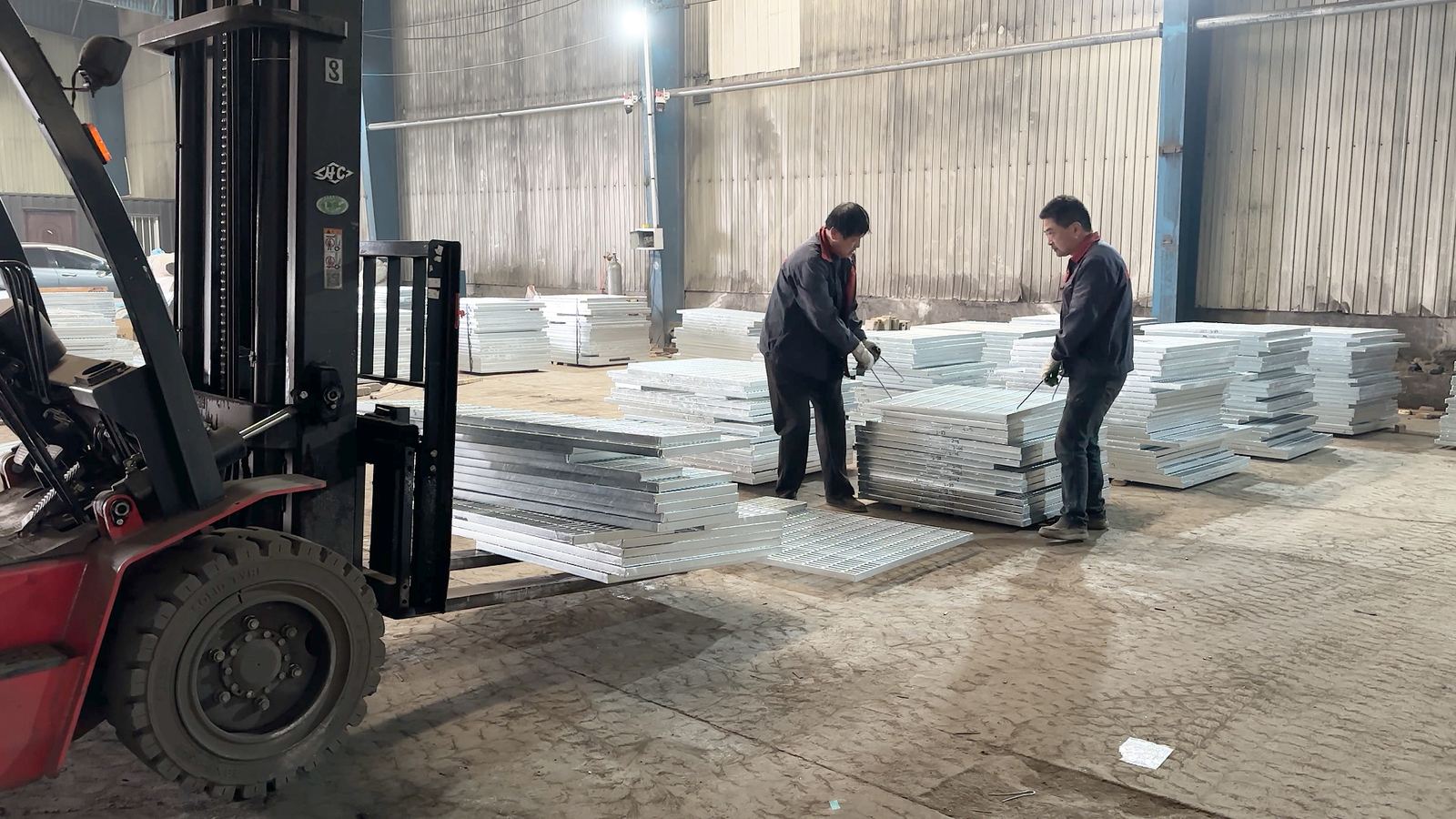
Start packing design before production ends
The packing plan needs the panel schedule, final weight, destination, container type, unloading equipment and installation sequence. If these inputs arrive only after fabrication, the supplier may have to re-sort panels or create bundles that are inconvenient for site crews.
Choose bundle size for handling, not only container utilization
A dense bundle may use container space efficiently but exceed the capacity of site forklifts or cranes. Define a maximum gross bundle weight and practical dimensions. Consider fork entry, sling access, center of gravity and safe separation of bundles during unloading.
Protect panel edges and finished surfaces
Use stable bearers and separators so straps do not deform edges or allow bundles to slide. Protect contact points where finished surfaces can rub. Stainless, painted, aluminum and galvanized products may require different separation materials and handling controls. Avoid direct contact between incompatible metals when moisture may be present.
Control moisture around galvanized grating
Fresh galvanized surfaces can develop wet storage stain when water is trapped between closely packed components with little air movement. Grating should be packed and stored to drain and ventilate. If bundles become wet, separate or incline them where safe and allow them to dry promptly rather than leaving standing water between panels.
Make identification usable on site
Each panel mark should match the approved layout. Each bundle label should show project, bundle number, gross weight, panel-mark range, quantity and destination area where applicable. Put duplicate labels on accessible sides and protect them against weather. The packing list should show exactly which marks are in each bundle.
Plan the container load and restraint
Distribute weight within container and transport limits. Use blocking, bracing and restraint designed for the expected movement. Keep door-opening risks in mind: unsecured cargo can shift toward the doors. The loading team should photograph completed restraint and visible bundle labels before closing the container.
Receiving checklist
- Inspect the container exterior, seal and door area before opening.
- Open and unload under the site safety procedure.
- Photograph any shifted load, damaged packing or water entry.
- Reconcile bundle numbers and quantities with the packing list.
- Store grating level, supported, drained and separated from mud or standing water.
- Report shortages or transit damage promptly with marks and photographs.
Frequently asked questions
Should every panel have a mark?
Custom fabricated panels should normally carry a mark linked to the layout. Standard panels may be identified by bundle and specification if individual marking is not required.
Can galvanized grating be wrapped completely in plastic?
Wrapping can protect against contamination, but sealed wet conditions can trap moisture. The packing system should balance weather protection with drainage and ventilation.
What should an RFQ say about packing?
State shipping mode, maximum bundle weight, label language, panel sequence, lifting restrictions, protection requirements and the packing records needed before dispatch.
Send your panel list, destination and unloading limits so packing can be included in the quotation.