
Anti-Slip Stair Treads: Serrated vs. Grip Strut
A practical guide for specifying metal stair treads in industrial facilities: slip resistance, bar grating vs. safety grating, materials, dimensions, and standards. Browse stair treads or request a quote with your drawings.
Why slip resistance matters on industrial stairs
Stairways are a concentrated risk in plants, refineries, power stations, and logistics buildings. Contamination from water, oil, dust, or process fluids reduces the effective friction between footwear and the tread surface. Many jurisdictions and owner specifications require walking-working surfaces and means of egress to be designed so that slip and fall hazards are controlled. Anti-slip treads are therefore specified not only for comfort but for incident prevention, insurance alignment, and documentation of due diligence during design review and audits.
Metal open-grid treads add another benefit: they drain liquids and debris instead of ponding on a solid step. That drainage behavior supports both slip performance and housekeeping. The choice among plain, serrated, and perforated safety-type treads should follow the expected environment, cleaning regime, traffic intensity, and structural load on each flight.
Serrated bar grating treads
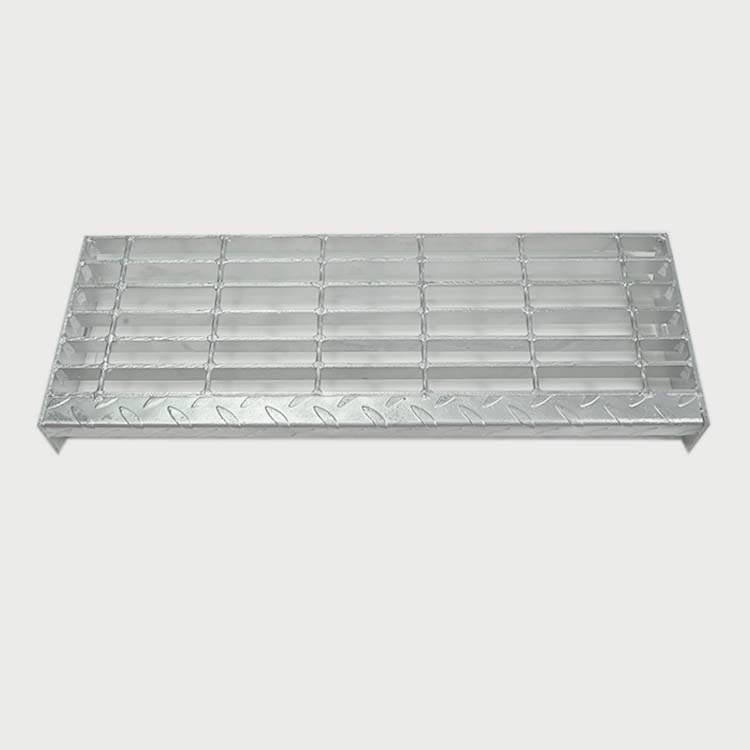
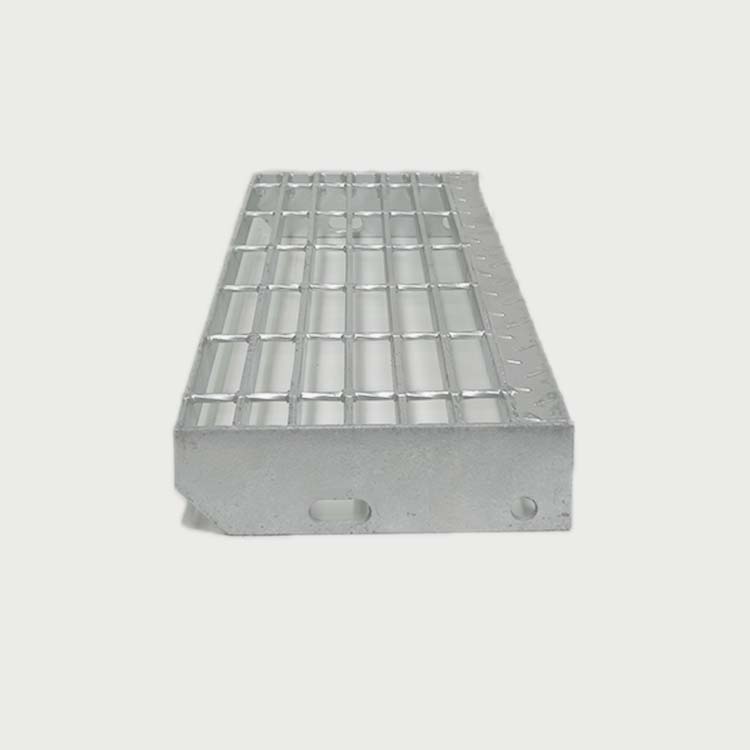
Serrated stair treads use bearing bars with a notched or toothed upper profile. The serrations increase micro-mechanical engagement with boot soles, especially when the surface is damp or lightly contaminated. On welded or press-locked bar grating converted to treads, serrations typically run along the bar; traffic is often oriented with the span, so the edges of the teeth bite across the direction of travel. Match landings to the same open mesh family where possible—a href="../../products/bar-grating/serrated-bar-grating/">serrated bar grating for platforms and welded bar grating when plain tops suffice structurally.
Advantages and limitations
- Pros: Strong slip performance for many wet and oily industrial cases; open mesh for drainage and visibility through the stair; well understood in North American and European grating practice; can be matched to standard panel load tables when fabricated as treads with proper supports.
- Cons: More aggressive underfoot than plain bar—less suited to barefoot or very soft-soled traffic; slightly higher cleaning effort for trapped fines in some mesh pitches; shoe wear can be higher in high-cycle pedestrian routes than on smooth surfaces.
Grip Strut and safety grating treads
Grip Strut–style (perforated safety grating) treads are formed from sheet metal with a pattern of debossed openings, often described as a diamond or lug array. The perforations and raised lugs provide traction in multiple directions, which helps on stairs where users may not always place feet perfectly parallel to the nosings. The pattern still allows drainage and reduces standing water compared with solid plate nosings alone.
Specifiers often choose safety grating treads where all-directional grip, a thinner profile for a given duty, or a consistent punched appearance is desired. Availability of exact product names varies by region; align commercial grades and thicknesses with your structural engineer’s span and deflection checks. For an overview of tread types and options, see industrial stair treads.
Comparison: serrated bar grating vs. Grip Strut
The table below summarizes typical procurement considerations for B2B buyers. Exact slip metrics depend on footwear, contaminant, test method, and maintenance; use it as a screening guide, then confirm with project standards and samples where required.
| Criterion | Serrated bar grating treads | Grip Strut / safety grating treads |
|---|---|---|
| Slip resistance (typical) | High in wet/oily industrial service when mesh and serration are appropriate; directional bias along bars | High; multi-directional lugs and edges engage soles at varied approach angles |
| Load capacity | Tied to bar height, pitch, span, and fixings; heavy-duty bar grating families available | Depends on sheet thickness, pattern, and support spacing; engineer per flight |
| Drainage / debris | Excellent open area; fines can lodge in tight meshes | Good drainage; openings smaller than coarse bar mesh—different cleaning profile |
| Weight | Varies with bar size; can be heavier for equivalent span than thin safety grating | Often lighter per square meter for moderate-duty spans |
| Relative cost | Competitive at common industrial pitches; galvanizing and nosing add cost drivers | Can be premium vs. plain bar depending on pattern, material, and batch size |
| Typical use | Outdoor steel stairs, platforms, OEM access, process areas with washdown | Retrofits, mezzanines, alternating-tread devices, OEM steps needing sheet-based treads |
Slip resistance should be validated against your specified test regime and site contaminants—not inferred from marketing terms alone.
Plain vs. serrated: when plain bar is acceptable
Plain (non-serrated) bar grating treads remain appropriate for controlled indoor stairs that stay dry, see light or predictable traffic, and are subject to regular cleaning. Examples include certain equipment access stairs inside conditioned buildings and secondary service steps where contamination is unlikely. Where there is any credible exposure to rain, tracked-in moisture, hydraulic oil, food waste, or dust that can polish the walking surface, serrated or safety grating surfaces are the more defensible default.
Material options
Carbon steel, hot-dip galvanized is the default for industrial projects: it balances strength, cost, and corrosion protection in outdoor and aggressive indoor atmospheres when the zinc coating is maintained. Stainless steel (commonly 304 or 316) is specified for food, pharmaceutical, coastal, or chemical-adjacent areas where galvanizing life or iron contamination is a concern. For aggressive chemical exposure beyond what metallic coatings tolerate, FRP grating and FRP stair products are often evaluated alongside steel; see our FRP vs. steel grating overview for material-level trade-offs.
Key dimensions and detailing
- Clear width: Industrial tread widths commonly fall in the 245—05 mm range per step (verify against local code and escape routes); wider stairs may use multiple panels or continuous grating runs.
- Length: Cut to the stair stringer line or carrier angle layout; provide net dimensions, nosing type, and fixing hole pattern when ordering.
- Nosing: Specify abrasive or yellow safety nosing, bolt-on angles, or integral nosings per your standard; nosings improve visibility and edge grip on the first line of contact.
Standards and guidance documents
Always apply the code and owner criteria governing your site. Commonly referenced frameworks include OSHA walking-working surface provisions for general industry (U.S.), NAAMM MBG 531 for metal bar grating terminology and design guidance, and EN ISO 14122-3 for permanent means of access to machinery and industrial installations (stairs, stepladders, and guardrails). Cross-check tread projection, rise and going, and load combinations with the edition adopted in your jurisdiction.
How to choose: decision logic
Use the following sequence when narrowing options with your EPC or safety team:
- Environment —wet, dry, or oily? Persistent wet or oily conditions favor serrated bar grating or safety grating treads with proven site-appropriate slip performance.
- Chemical or corrosive exposure? If the stair is in a chemical splash zone or requires non-sparking or high chemical resistance, evaluate FRP or high-alloy stainless solutions rather than default galvanized steel.
- Traffic and cleaning —heavy pedestrian or coarse debris? Coarser mesh may reduce clogging; very fine mesh can require more maintenance. Align open area with debris size and hose-down practice.
- Structure —span and load? Select bar size / sheet thickness and support spacing to meet deflection limits; document uniform and concentrated loads per stringer design.
- Documentation —Record finish, slip strategy, and standard references in the specification package. For line-item templates, use how to specify as a checklist against your drawings.
Next steps
Anti-slip stair tread selection is an integration of safety, structure, and lifecycle cost. Review stair tread product families, send loads and geometry through Request a Quote, and align notes on standards and finishes with engineering: how to specify before issue for fabrication. Route-level context: stair systems applications and safety flooring for how treads sit alongside platform mesh.