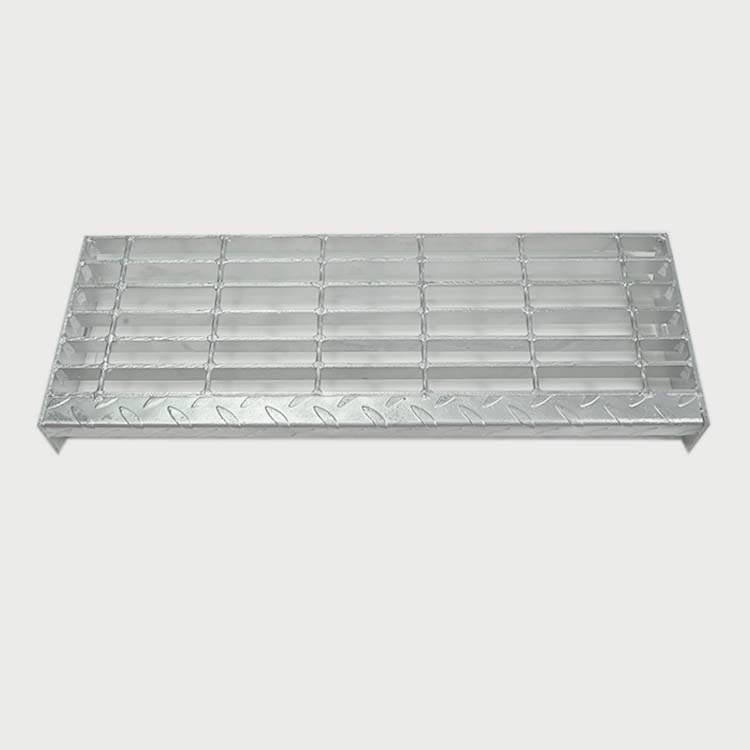
Serrated steel stair treads

Serrated stair treads with raised teeth for maximum slip resistance in wet, oily, or industrial environments.

Serrated steel stair tread for industrial stairs
Serrated nosing / top for wet or oily stairs.

Product Description

Serrated stair treads feature raised teeth or serrations on the bearing bar surface to provide maximum slip resistance in wet, oily, or high-traffic industrial environments. The serrated profile improves traction underfoot and is ideal for outdoor stairs, chemical plants, food processing facilities, and areas where moisture or contaminants are present. Available in welded construction with nosing options and hot-dip galvanized or stainless finishes.

Specification Details
Surface Serrated bearing bars for enhanced slip resistance
Construction Welded bearing and cross bars; serrations on top surface
Typical environments Wet, oily, outdoor, chemical, food processing
Materials Carbon steel, stainless steel (304, 316)
Finishes Hot-dip galvanized, painted, stainless
Nosing Serrated nosing available for additional safety

Common Specifications (GB & US Standards)

Stair treads to GB/YB/T 4001.1 and ANSI/NAAMM. Common widths: 200–300 mm (GB); 8″–12″ (US). Lengths to suit stringer spacing. Serrated surface per standard. Specify tread dimensions, nosing, and finish in RFQ.

Stair tread applications by sector

Data centers

Access stairs to roof plant and data-hall mezzanines—match slip and load to owner standards.

Power generation

Boiler and turbine stair towers with washdown and condensate exposure.

Oil & gas

Module escape stairs and offshore companionways requiring serrated profiles and documented loads.

Related pages

Detailing notes

Specify for wet turbine, HRSG, or offshore stairs; align with serrated platforms.

Frequently asked questions

How is stair tread span defined?

Clear distance between stringers supporting the tread; verify with the supplier table for the model.

Plain or serrated nosing?

Match platform slip strategy; serrated nosing is common in wet plants.

Bolted vs welded treads?

Bolted eases replacement; welded is common for fixed industrial stairs.

Load basis?

Typically uniform load per stair width plus maintenance concentrated load if owner requires.

Galvanizing after fabrication?

Standard for carbon steel; vent per detail drawings.

Riser and going tolerances?

State expected fabrication tolerance class so nosing lines stay straight across flights.

Custom marking for escape routes?

Photoluminescent nosing or paint bands may be added—state in RFQ.

Need a quotation?

Send product type, spacing, material, finish, tread dimensions, quantity, and drawings.

Request a Quote