
Aluminum Grating for Marine & Offshore Applications
Aluminum bar grating offers a unique combination of light weight, natural corrosion resistance and non-spark properties that make it ideal for offshore platforms, coastal terminals, water treatment plants and marine infrastructure. This guide covers alloy selection, load performance and when to choose aluminum over stainless steel or FRP.
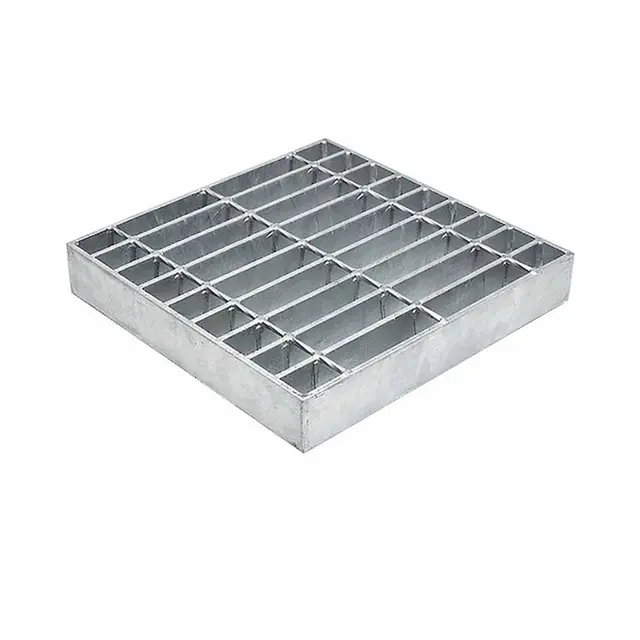
Why aluminum for marine and offshore
Marine environments attack steel through salt-laden air, frequent wetting and high humidity. Hot-dip galvanized carbon steel offers good protection but requires coating maintenance and eventual replacement in aggressive coastal zones. Aluminum grating — manufactured from 6063-T5 or 6061-T6 alloy — provides inherent corrosion resistance without coatings. A natural oxide layer forms on the surface and self-repairs if scratched, making aluminum a low-maintenance choice for long-service-life installations.
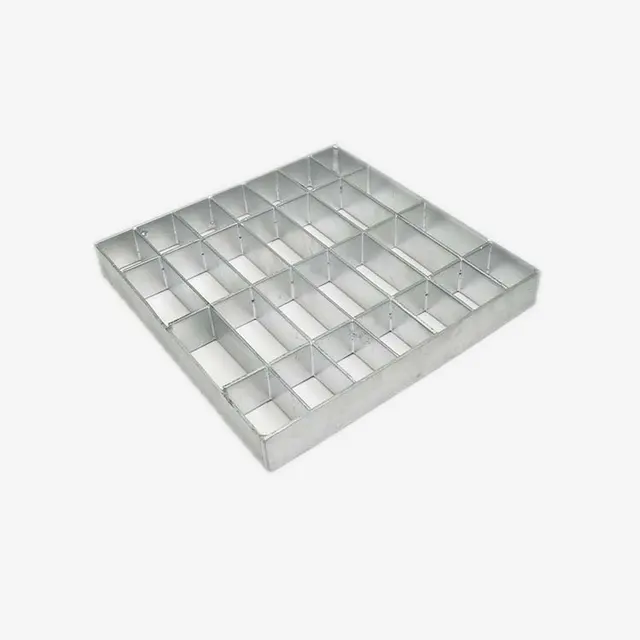
Weight is the second driver. On FPSO topsides, offshore platform modules and floating structures, every kilogram matters. Aluminum grating at roughly one-third the weight of steel reduces the dead load that the primary structure must carry. This translates directly into smaller structural steel sections, reduced crane lifts during installation and lower logistics costs.
Alloy grades: 6063-T5 vs 6061-T6
6063-T5 is the most common aluminum grating alloy. It extrudes cleanly, resists atmospheric corrosion well and provides sufficient mechanical properties for pedestrian and light-vehicle applications. 6061-T6 offers roughly 40% higher yield strength and is specified where higher load capacity or longer spans are required. Both alloys are widely available and accepted under ASTM B221 and EN 755.
Load tables and span selection
Aluminum deflects more than steel for the same bar size and load because its elastic modulus is approximately one-third that of steel (69 GPa vs 200 GPa). This means:
- For the same bar size and load, aluminum requires shorter spans than steel
- Increasing bar depth or reducing spacing compensates for the modulus difference
- Standard aluminum bearing bars: 25 × 3, 32 × 3, 32 × 5, 40 × 5 mm
- Standard spacings: 30 mm (pedestrian), 40 mm (light industrial)
- Pedestrian loads (5.0 kPa): 25 × 3 bars span approximately 900–1000 mm at 30 mm pitch
Always use aluminum-specific load tables for deflection calculation — steel load tables will overestimate aluminum load capacity.
Construction and finishing
Aluminum grating is manufactured by press-locking — bearing bars are mechanically locked to cross bars without welding. This produces a clean, smooth appearance suitable for architectural applications in addition to industrial use. Surface finishes include:
- Mill finish — natural aluminum, no additional treatment. Suitable for most marine atmospheric exposure
- Anodised — 10–25 µm oxide layer for enhanced appearance and additional surface hardness
- Serrated — notched bearing bar top surface for slip resistance in wet conditions
When to choose aluminum
- Weight-sensitive structures: FPSO topsides, helidecks, floating docks
- Atmospheric marine exposure: jetties, piers, coastal walkways
- Non-magnetic requirements: near MRI equipment, sensitive instrumentation
- Architectural appearance: naturally metallic without paint or coating
- Rooftop walkways: reduced structural load on existing buildings
When not to choose aluminum
- Strong alkaline environments (pH > 9): aluminum corrodes rapidly
- Heavy vehicle traffic: compare complete-assembly calculations for the actual wheel load, footprint, span, frame and anchors before selecting aluminium
- Explosion-risk zones: aluminum can produce sparks on impact — use FRP or stainless instead
- Direct contact with dissimilar metals: requires isolation to prevent galvanic corrosion