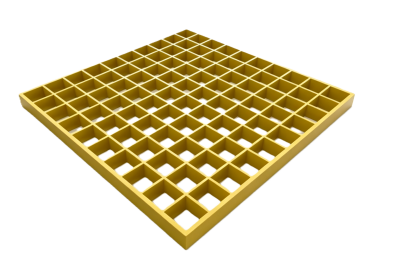
Mini-mesh FRP grating
Mini mesh FRP grating with fine opening for small object retention. Ideal for food processing, cleanrooms, and areas requiring small opening size.
Product Description
Mini mesh FRP grating features a finer mesh pattern with smaller openings than standard molded grating. The reduced opening size prevents small objects, tools, or debris from falling through while still allowing drainage and ventilation. Ideal for food processing facilities, cleanrooms, laboratories, and areas where small-item retention is important. Lightweight, corrosion-resistant, and available in various resin types for chemical compatibility.
| Specification | Details |
|---|---|
| Mesh size | Fine opening; smaller than standard molded grating |
| Opening | Designed to retain small objects; confirm opening size per application |
| Typical use | Food processing, cleanrooms, laboratories, small-item retention areas |
| Resin types | Polyester, vinyl ester for chemical resistance |
| Benefits | Lightweight, corrosion-resistant, small opening, low maintenance |
| Surface | Smooth or grit top; anti-slip options available |
Mini-mesh FRP applications
Data centers
Pedestrian bridges near public areas where small openings improve comfort.
Power generation
Platforms above cable spreads needing smaller openings than standard FRP mesh.
Oil & gas
Temporary maintenance pads over sensitive equipment.
Related
Open area vs strength
Tighter mesh increases laminate density; verify spans against FRP span tables.
Frequently asked questions
Difference vs standard FRP mesh?
Smaller openings, typically higher weight per area.
Suitable for heels?
Often specified for that reason—cite local accessibility rules.
Colors?
Available on many lines.
Chemical compatibility?
Same resin rules as other FRP.
Pultruded vs molded mini-mesh?
Molded is common; pultruded may be used for longer spans—ask for line-specific data.
Cleaning debris in tight mesh?
Smaller openings trap fines faster—state maintenance method in O&M.
Need a quotation?
Send mesh size, thickness, resin type, panel dimensions, quantity, and project requirements.