
Steel Grating for Data Centers
Search intent here is practical: where specifiers use open-grid flooring in colocation and hyperscale sites, what loads and finishes matter, and how steel compares to aluminum for access platforms—not generic “digital transformation—copy.
Introduction
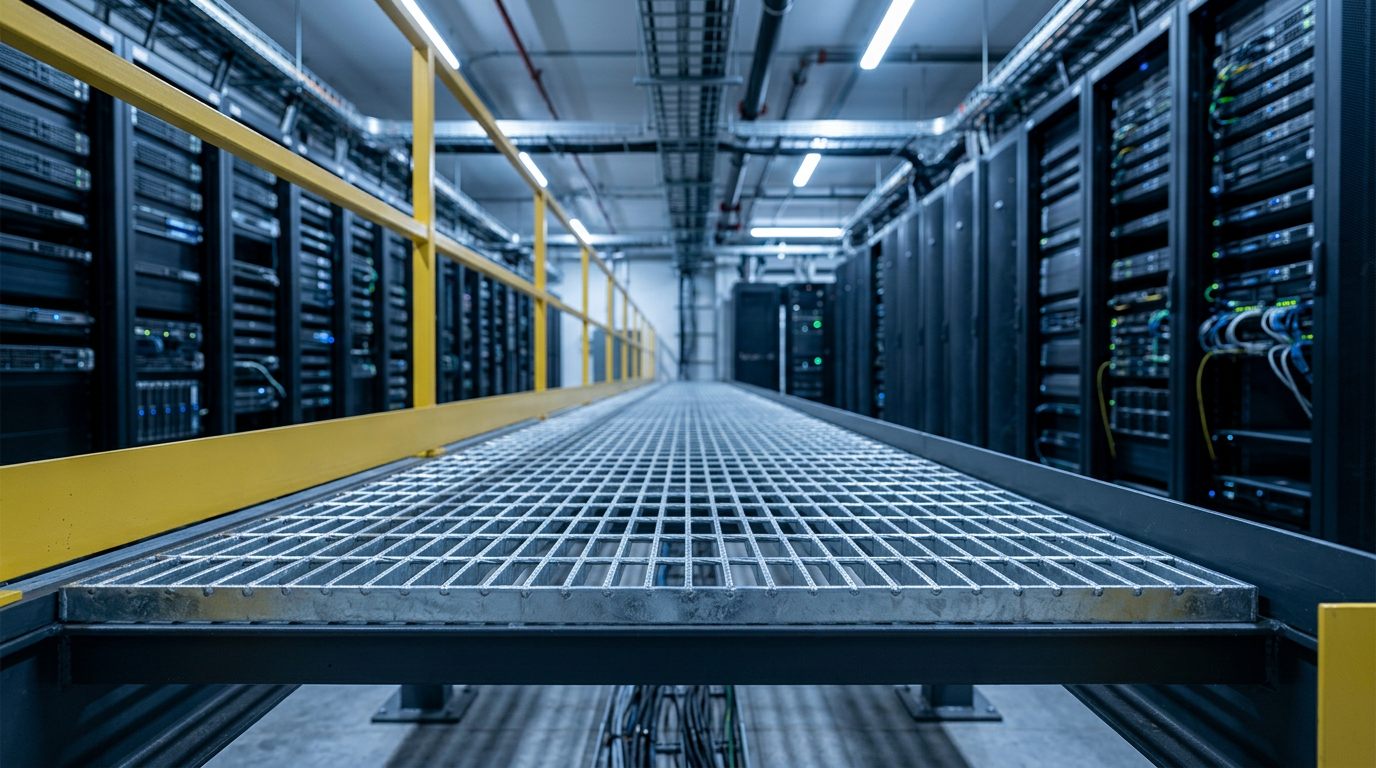
Data centers combine strict structural discipline with mechanical air paths that do not forgive accidental bypass leaks. Welded steel bar grating shows up where the facility needs a walkable surface with high open area, predictable fabrication, and straightforward fire documentation compared to some polymer systems. It is not automatically interchangeable with proprietary raised-floor tiles in the white space; instead, it tends to serve plant decks, mezzanines, exterior yards, and secondary access routes where the mechanical engineer can account for open mesh in the model.
Typical in-building uses
Mezzanines over switchgear or corridor bridges
Light mezzanines for cable pulling, valve access, or maintenance bypasses often use press-locked or welded mesh depending on appearance and budget. Loads must include staged equipment during commissioning, not only “walking only.—Check deflection against sensitive tray supports running beneath the deck.
Walkways above chilled-water piping
Open mesh allows condensate to fall to drains instead of ponding on solid plate, provided the HVAC layout expects it. Where containment rules require a continuous pressure boundary, solid covers or gasketed panels replace grating locally—document those transitions on the plan.
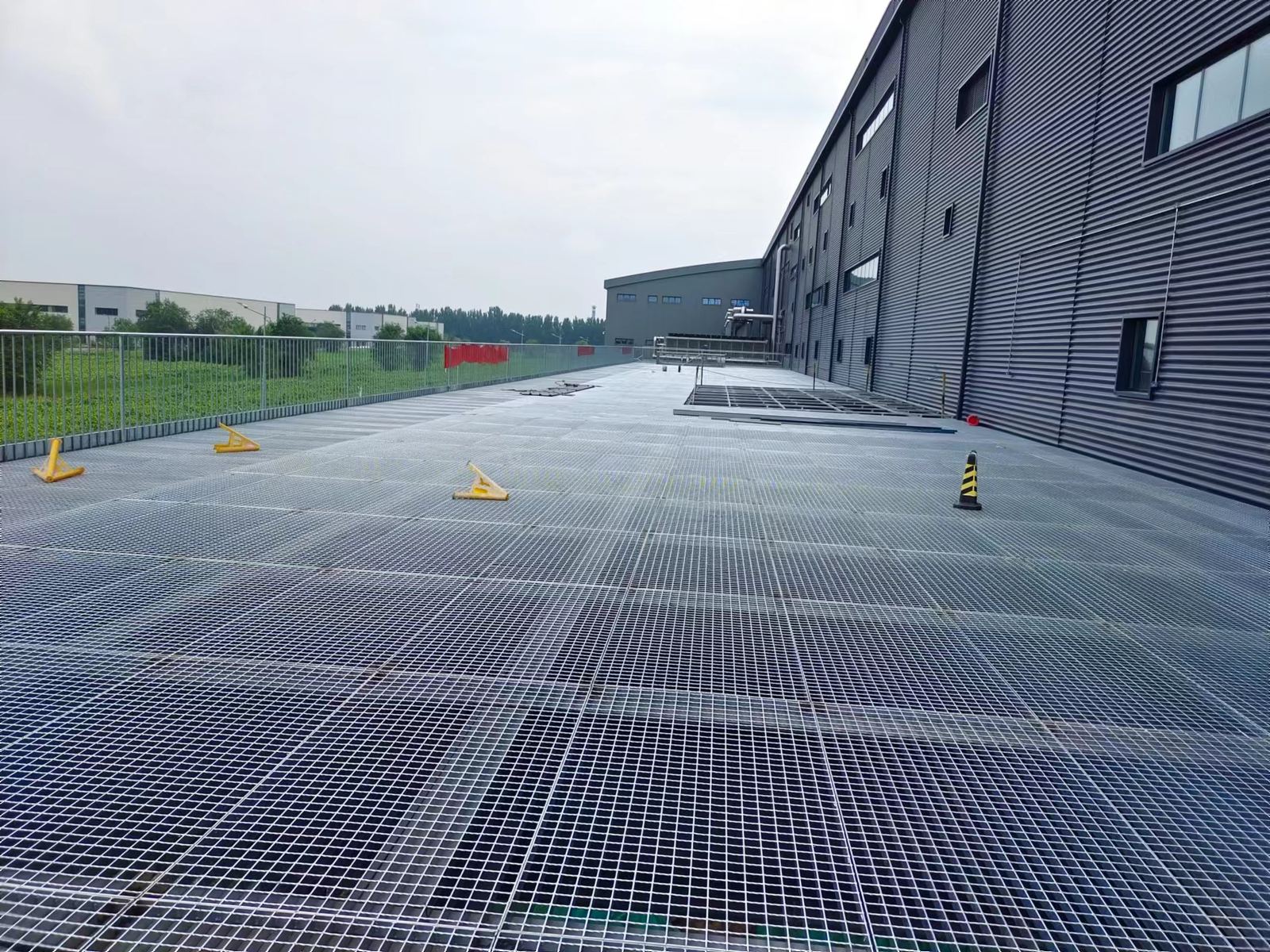
Outdoor and yard applications
Generator compounds, cooling equipment yards, and diesel delivery paths combine weather exposure with occasional washdown. Hot-dip galvanized serrated grating is a common choice when traction matters and coatings must survive without a full repaint program. Pair with trench covers over cable trenches that need infrequent but rated access.
Airflow and containment considerations
Open area percentage varies with bearing bar pitch and cross bar spacing. A mechanical contractor should confirm whether a grating insert in a chase wall or plenum partition is acceptable or whether it creates an unintended bypass between hot and cold aisles. If the answer is “no free air through that opening,—you may need composite grating with a sealed plate top, solid checker plate, or a different assembly altogether.
Steel versus aluminum in data halls
Aluminum grating appears where mass-handling limits crane picks or where a facility standard prefers non-sparking arguments in specific zones. Steel wins on stiffness per dollar in many industrial spans and on familiarity for hot-dip galvanizing in outdoor yards. The decision is structural and supply-chain specific, not ideological.
Cable trays, trays underfoot, and coordination
Grating walks often run parallel to large cable ladder systems. If the tray hangs below the walking surface, confirm headroom after deflection and guardrail height. If technicians routinely stand on the grating while pulling cables, treat that as a higher localized load than a nominal 2.5 kPa maintenance walk. Snap a note on the drawing: “no tray supports bearing on grating without structural review.—That single line prevents field fixes with ad hoc angles welded to mesh that was never checked for the extra hanger reaction.
Commissioning and future reconfiguration
Colocation operators re-sheet aisles during tenant churn. If your grating sits in a corridor that may be re-banked from hot to cold containment, ask whether the opening percentage still matches the future CFD model. Where reconfiguration is likely, specify demountable clip systems from accessories and panel sizes that can be removed without cutting hot-dip members in place—cutting galvanized steel on site burns off zinc at the cut line and triggers touch-up scope.
Specification checklist for RFQs
- Plan and elevation with support spacing and bearing bar direction noted.
- Live load and any maintenance wheel loads with deflection limit.
- Required open area band or, if unknown, “confirm with mechanical.
- Finish: galvanized, painted system reference, or stainless.
- Grounding/bonding notes referencing the electrical design.
- Stair connections if the route terminates on serrated stair treads or welded treads.
Related pages
Industry hub: data center solutions. Application context: platform flooring, walkways. Selection: how to choose steel grating. Loads: load capacity explained. Non-metallic option: FRP grating. Request pricing via RFQ.
Frequently asked questions
Is steel grating used as the main raised floor in server halls?
Most white-space floors use die-cast aluminum or steel panels suited to equipment loads and cable cutouts. Bar grating appears more often on maintenance mezzanines, cable bridges, outdoor yards, and plant levels where open area or drainage matters. Follow the structural and mechanical design for the tier.
Why does open area matter for grating near CRAC lines?
Open mesh changes pressure drop and air routing versus solid plate. HVAC models decide whether grating short-circuits containment or assists returns.
Should data center grating be galvanized or painted?
Indoor dry areas may use painted or galvanized steel per owner standards. Outdoor yards often favor hot-dip galvanized carbon steel; coastal sites may justify stainless.
What loads should mezzanine grating be checked for?
Code live load for the occupancy plus localized equipment, staging, and carts. Deflection may be tighter than code minimum when trays or racks are sensitive.
Does steel grating need a grounding strategy?
Yes. Steel conducts. Bonding must follow the electrical code and facility earthing plan. FRP is an alternative when isolation is required, subject to load and fire rules.