
Application
State the operating area, access frequency and any wet, corrosive or public-safety conditions.
Commonly supplied as part of a complete access package.
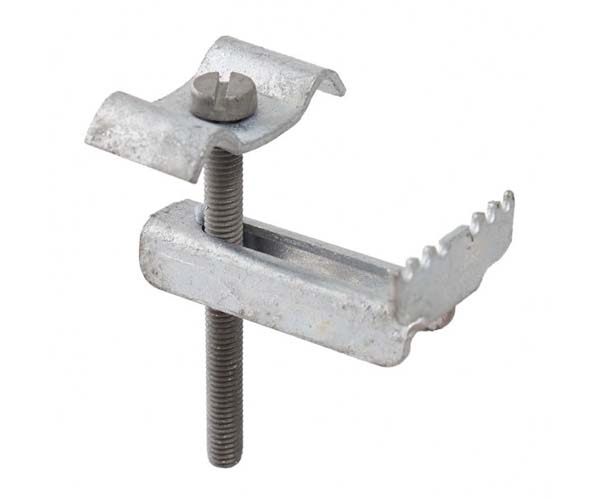
Configured for industrial projects
Panel joining clips for connecting adjacent grating panels. Provide alignment and continuity across multi-panel installations.
Panel joining clips for connecting adjacent grating panels. Provide alignment and continuity across multi-panel installations.

Panel joining clips connect adjacent grating panels at their edges to maintain alignment, prevent gaps, and provide continuity across multi-panel installations. They bridge the joint between panels and can be used with or without underlying support. Panel joining clips improve walkability and load distribution at panel boundaries. Available in carbon steel or stainless steel to match grating material and finish.
| Specification | Details |
|---|---|
| Function | Connect adjacent panels; maintain alignment and continuity |
| Typical use | Multi-panel platforms, walkways, large floor areas |
| Materials | Carbon steel, stainless steel (304, 316) |
| Finishes | Hot-dip galvanized, painted, stainless |
| Sizes | To suit grating type and bearing bar spacing |
| Installation | Clamped or bolted at panel joints; spacing per specification |
Cable-tray and CRAC maintenance platforms use saddle clips with documented torque in O&M manuals.
Turbine decks subject to vibration may specify hold-downs at panel corners per mechanical package.
Offshore modules require positive retention and inspection paint marking for clip integrity surveys.
Joining clips align abutting panels for continuous walk lines on long rack platforms.
They align and tie panels; primary load path remains supports.
Ask about slotted holes if thermal movement is large.
Match clip finish to grating finish.
Long straight runs may need slip joints—coordinate with structural.
Catalog clips cover common bar pitches; odd pitches need shop review.
Joining clips forgive small panel offset but not gross beam level errors.
Send grating type, spacing, material, finish, quantity, and project requirements.
Selection support
Share the application, load, span, material and finish with the RFQ.
State the operating area, access frequency and any wet, corrosive or public-safety conditions.
Provide clear span, bearing direction, design load, dimensions and required standards.
Include frames, clips, banding, toe plates, railings and drawings in one coordinated RFQ.